
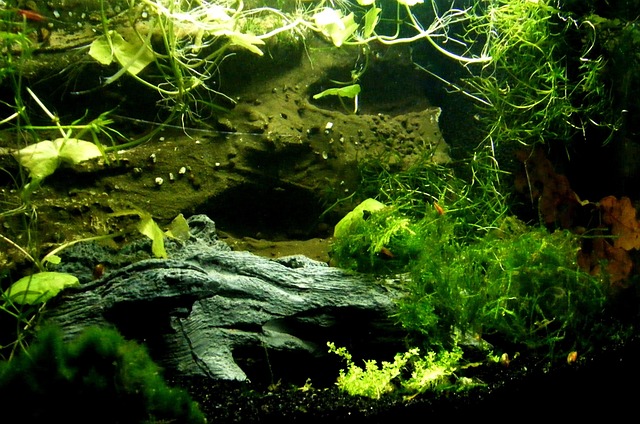
Account for hidden grazing
Shrimp may forage on leaves, moss, roots, and shaded surfaces that are hard to see from the front. A quiet tank can still provide many places to pick at small growth.
That does not prove the aquarium supplies every nutrient. Continue an appropriate complete food and use the colony’s condition as one input.
Place food where you can check it
Choose an accessible spot rather than dropping pellets deep into dense plants. This makes it easier to observe consumption and remove leftovers.
Avoid moving plants around repeatedly to locate hidden food. A small feeding dish or open area can help if it suits the tank, but it is optional.
Keep plant care shrimp-aware
Before using fertilizer or plant treatments, check the product label for invertebrate cautions. A plant’s nutrient schedule can affect water chemistry and should be introduced carefully.
If shrimp behavior changes after a plant-care product, note the dose and timing and test the water. Do not assume that all aquarium fertilizers are interchangeable.
- Aquarium Co-Op · Care Guide for Cherry Shrimp
- Aquarium Co-Op · 5 Best Foods for Freshwater Aquarium Shrimp
Use these as general hobby references. Test your aquarium and confirm product guidance before making changes.