
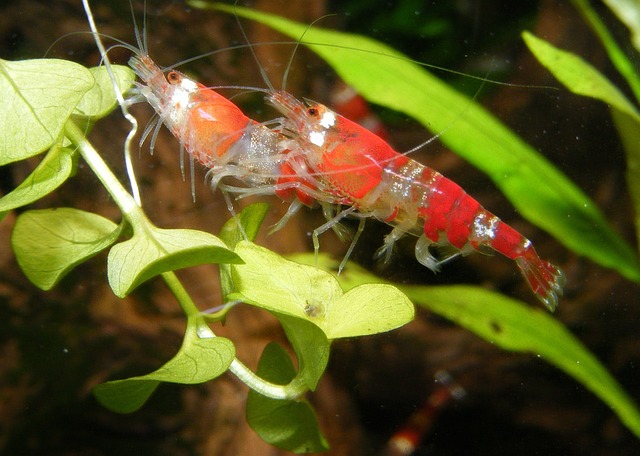
A useful starting reference
Published care guides give broad ranges, not one universal recipe. Aquarium Co-Op lists pH 6.5–8.5, GH of at least 6 degrees, and KH of at least 2 degrees for cherry shrimp. Its guide describes 72–76°F (22–24°C) as comfortable, while noting a wider tolerated temperature range.
Those figures are a reference, not a promise that every colony will thrive at every edge. Shrimp raised in a particular water source may do better when the new aquarium is close to that source and stays steady.
| Measure | Why it matters | Practical note |
|---|---|---|
| Temperature | Affects activity and metabolism | Avoid fast swings; heat only if the room varies too much. |
| GH | Dissolved calcium and magnesium | Check when molts look abnormal; do not dose by guess. |
| KH | Carbonate buffering | Affects how resistant pH is to change. |
| pH | Acidic or alkaline reading | Read with KH and source-water context. |
Test before you adjust
Use a test suited to the parameter and record results over time. TDS is a broad conductivity reading: it does not tell you which minerals or contaminants are dissolved, so it cannot replace GH, KH, or a source-water check.
If tap water is far from a target, change the approach slowly and research the mineral content of any remineralizer. Avoid chasing a number with repeated additives. Sudden shifts can be harder on shrimp than a stable value that is not textbook-perfect.
Use these as general hobby references. Test your aquarium and confirm product guidance before making changes.