
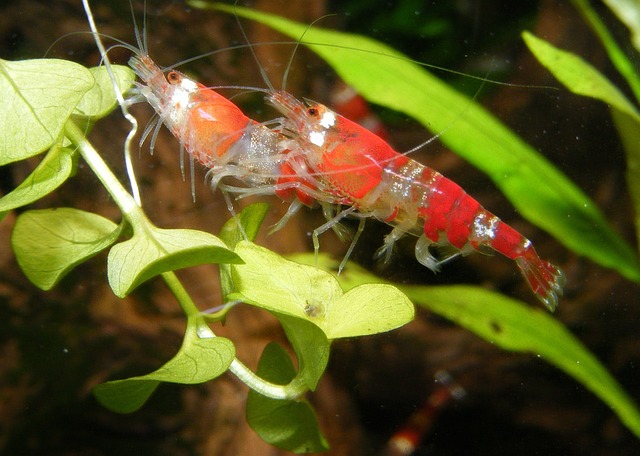
Start with a settled aquarium
Neocaridina davidi are often recommended to beginners because they adapt to a wider range of aquarium conditions than many ornamental shrimp. Adaptable does not mean indestructible: a stable, fully cycled tank is a safer start than a brand-new setup.
A planted tank gives shrimp surfaces to graze and places to shelter. Moss, fine-leaved plants, wood, and leaf litter can collect biofilm and microorganisms. Use a sponge filter or protect the intake so tiny shrimplets cannot be pulled into it.
Keep the routine gentle
Test water before adding shrimp. Make gradual changes when something is off instead of correcting several values at once. Keep replacement water close to the aquarium in temperature and mineral content, and avoid large, sudden swings.
Shrimp forage through the day, so feed small portions and remove food that remains uneaten. A varied diet can include a complete shrimp food and occasional suitable vegetables. Overfeeding can foul a small aquarium quickly.
Watch behavior, not just color
Healthy shrimp pick across surfaces, hide after molting, and may carry eggs beneath the abdomen. A clear, split exoskeleton is usually a molt, not a dead shrimp. Keep copper-containing medications away unless specifically labeled safe for invertebrates.
If several shrimp become inactive or deaths appear, test ammonia, nitrite, temperature, and hardness before adding products or making a drastic water change. Observation and stable care are better first steps than guesswork.
Use these as general hobby references. Test your aquarium and confirm product guidance before making changes.