
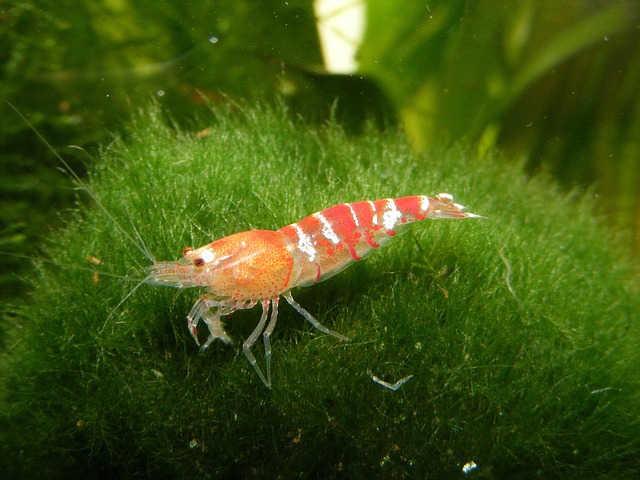
Observe the carrying stage
After mating, eggs remain attached beneath the female and are moved by her swimmerets. Their color and visibility vary by line, lighting, and stage of development.
The female continues normal grazing and may hide more than usual. Provide calm cover and avoid moving her between tanks without a strong reason.
Let the hatch happen naturally
Neocaridina hatch as small, fully formed shrimplets rather than passing through a free-swimming larval stage in the aquarium. They begin grazing on fine surfaces.
Published hobby timelines are approximate and affected by temperature. If eggs disappear, consider a molt or normal loss before concluding that the colony has a problem.
For your own tank
Use a photograph taken from the same angle if you want to compare egg development. Do not move the female to a separate container solely for observation. Stable temperature and low disturbance are more useful than trying to accelerate hatching.
Use these as general hobby references. Test your aquarium and confirm product guidance before making changes.